Zomato · For people who just moved
Order like a local,
from day one
People who move to a new area can't tell which food is good, so they scroll, guess, or give up. I designed a Zomato feature that shows what locals order, so a newcomer can order with confidence. A good first order becomes a go-to dish and place, repeat orders get easier each time, and Zomato becomes the default way to eat in the new area: confidence, then repeat orders, then habit.
Every restaurant name is new, and ratings don't feel trustworthy.
"What locals here order" on home, with real facts on each card.
More newcomers ordering within 10 minutes, and coming back to order again.
A newcomer’s first order is a gamble. Showing what locals reorder makes that first order a safe one, and a good first order becomes a go-to dish and place. Each repeat order then takes less thought, so Zomato becomes the habit in the new area instead of asking around or guessing. Success is coming back, not just one order.
- Role
- Solo, research to prototype
- Research
- 6 interviews, 3 testers
- Tools
- Claude Code
How it works, in three screens
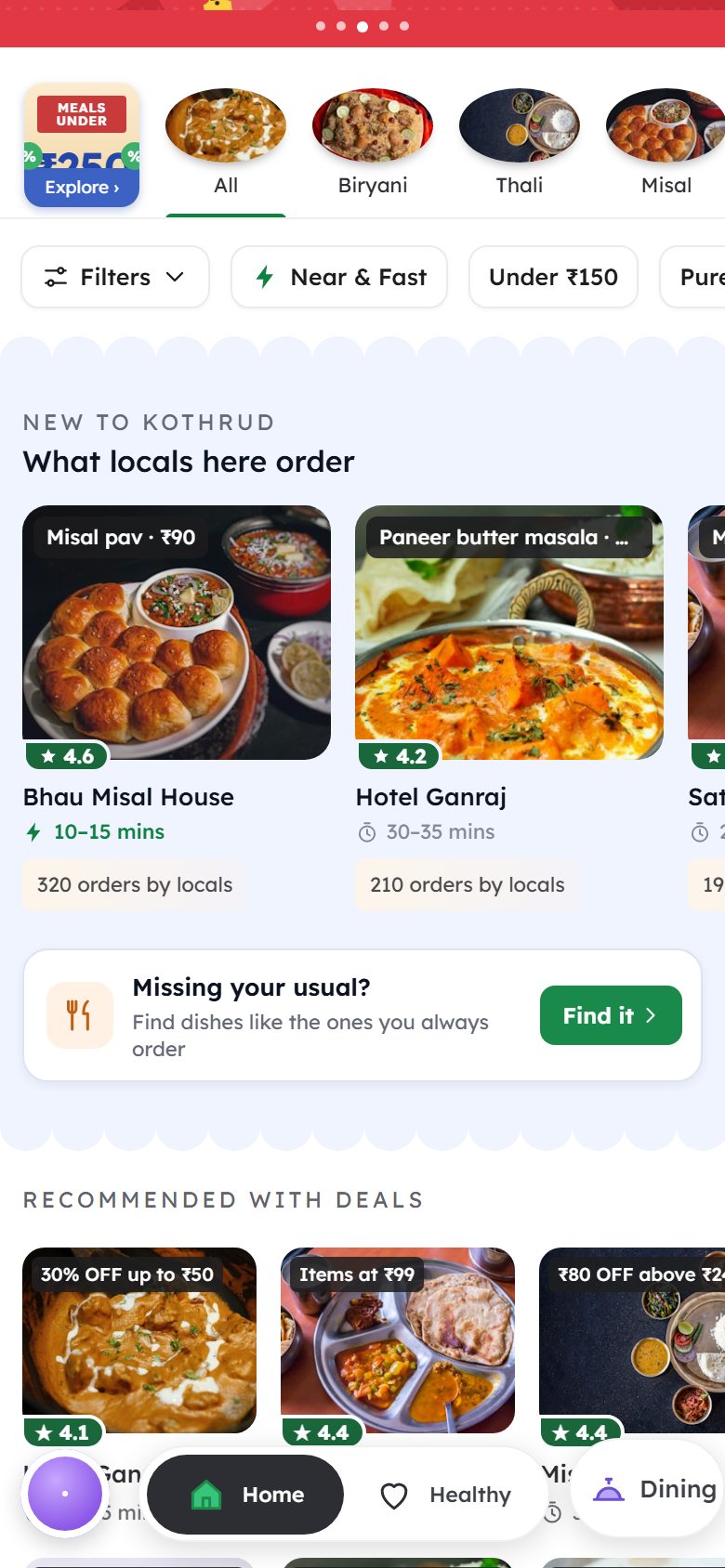
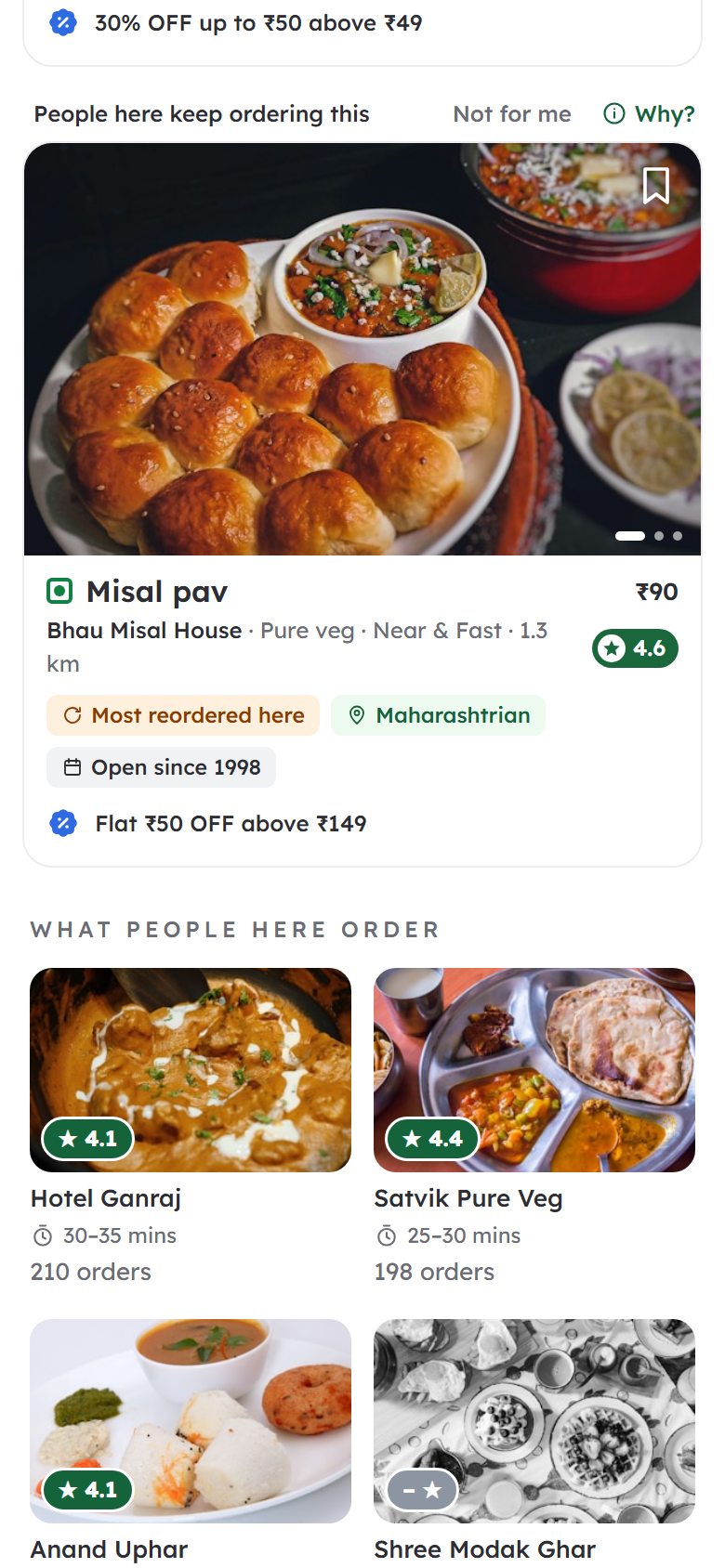
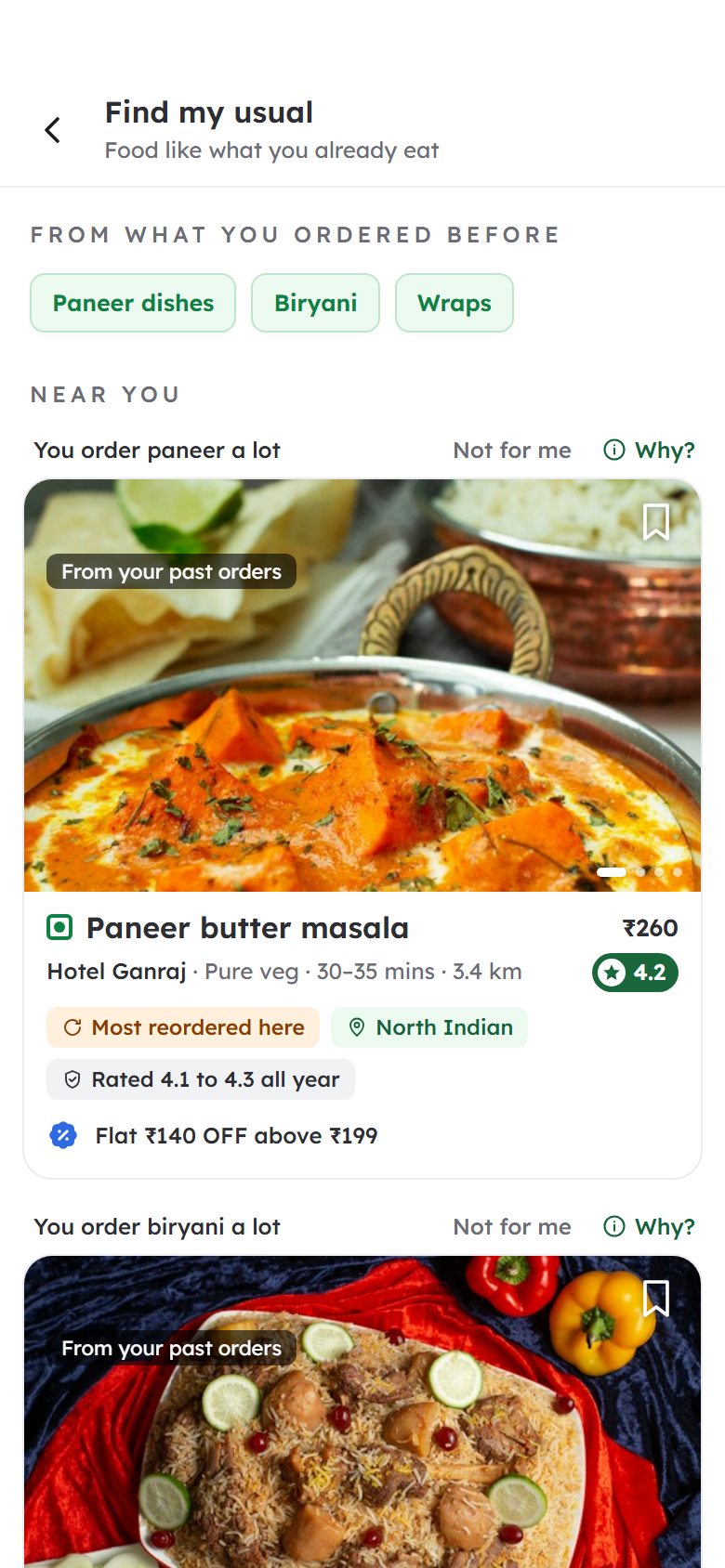
A student concept, not made with or for Zomato. Restaurants and numbers in the prototype are sample data.
Hungry, in a new area, and every name was new
It happened to me in Pune. So I called 6 people who had moved, and they told me the same.
At a relative's place in Pune, hungry.
Opened Zomato. Every name was new.
Scared of food that only looks good, I kept scrolling.
Finally ordered a roll.
Just above average. Won't order there again.
Absolute blind trust I can't do on this platform.
Then I asked my uncle, 'Where do you order from?'
What it came down to · Job to be done (JTBD)
“When I’m in an unfamiliar area, I want to know what’s actually good to eat there, so I can order with confidence instead of guessing blindly.”
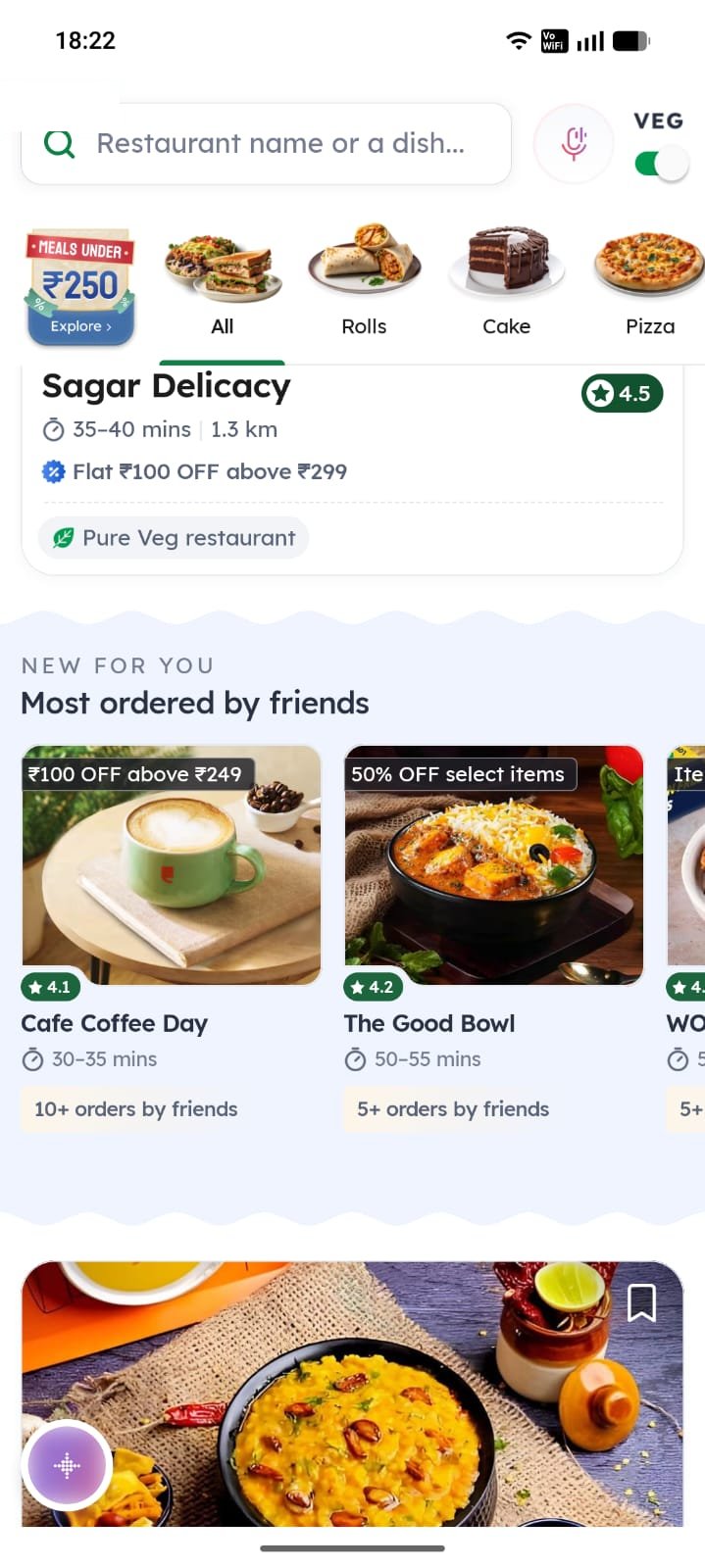
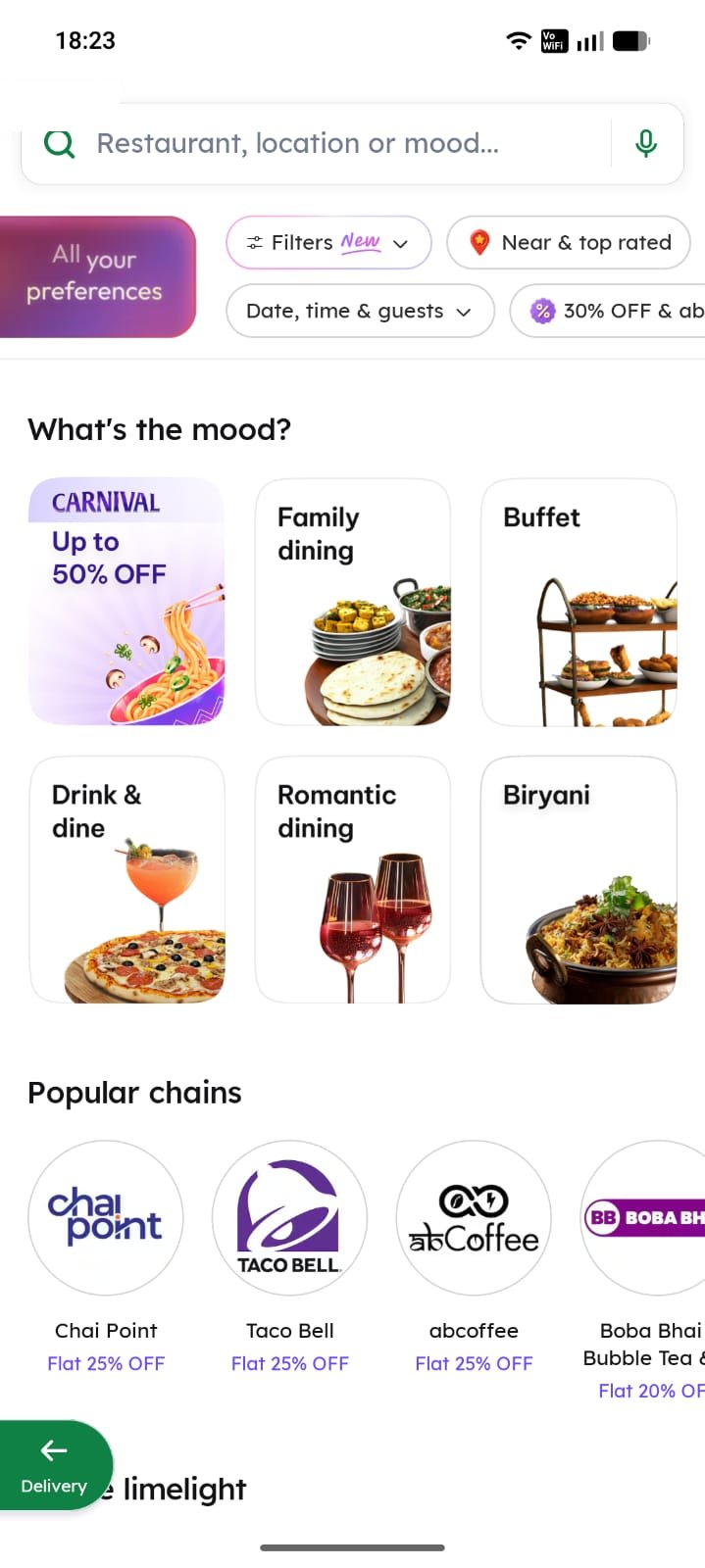
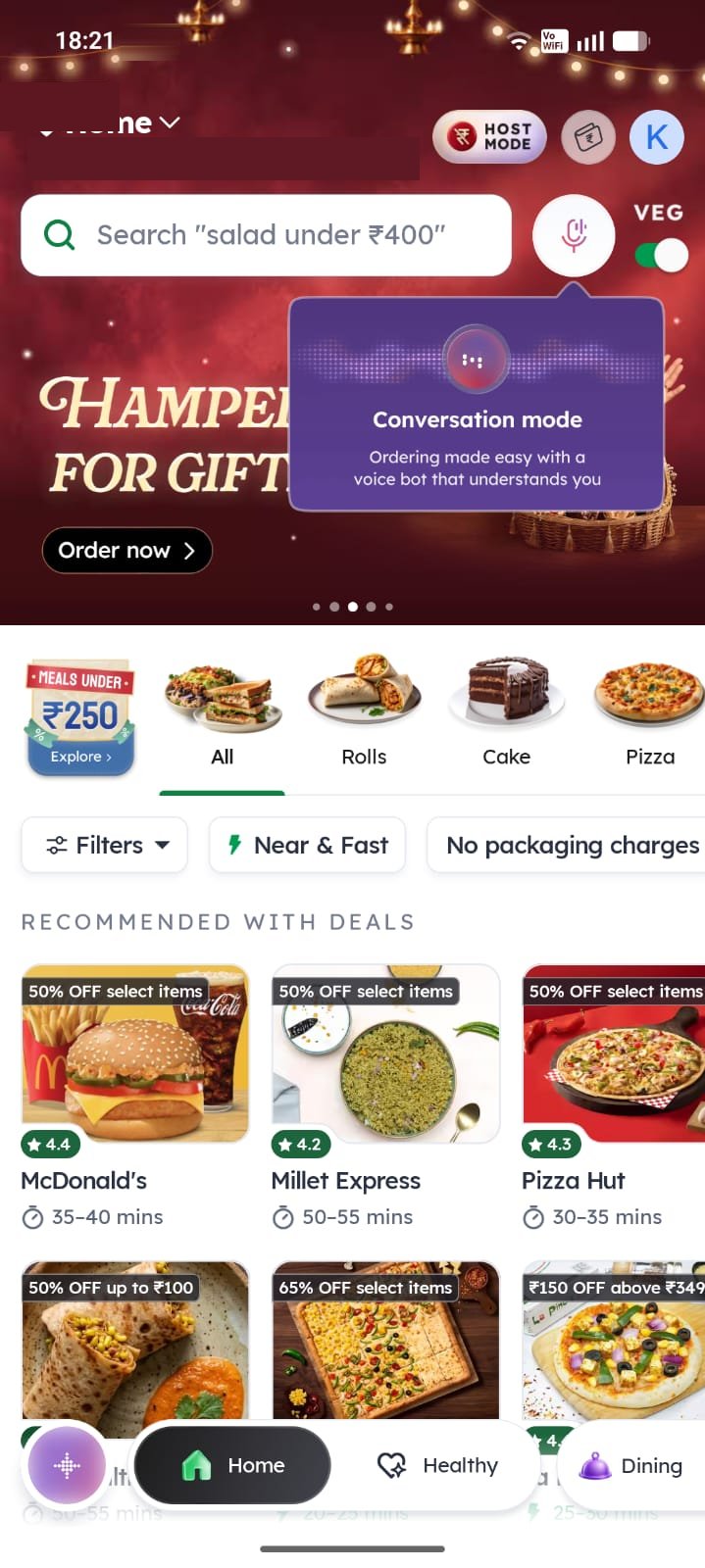
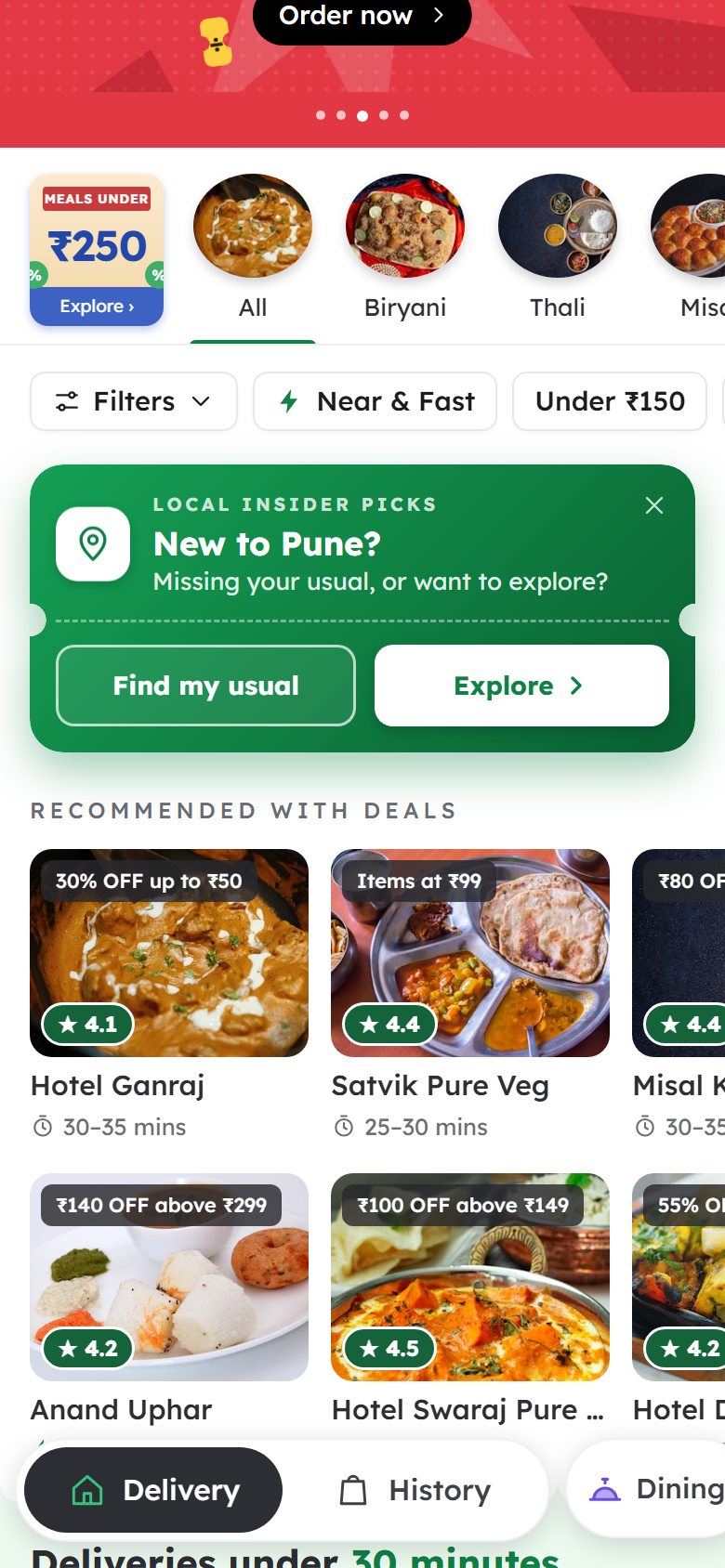
Zomato helps you browse. Not trust.
Even in Bangalore, where Zomato has the most features, nothing told a newcomer what's good.
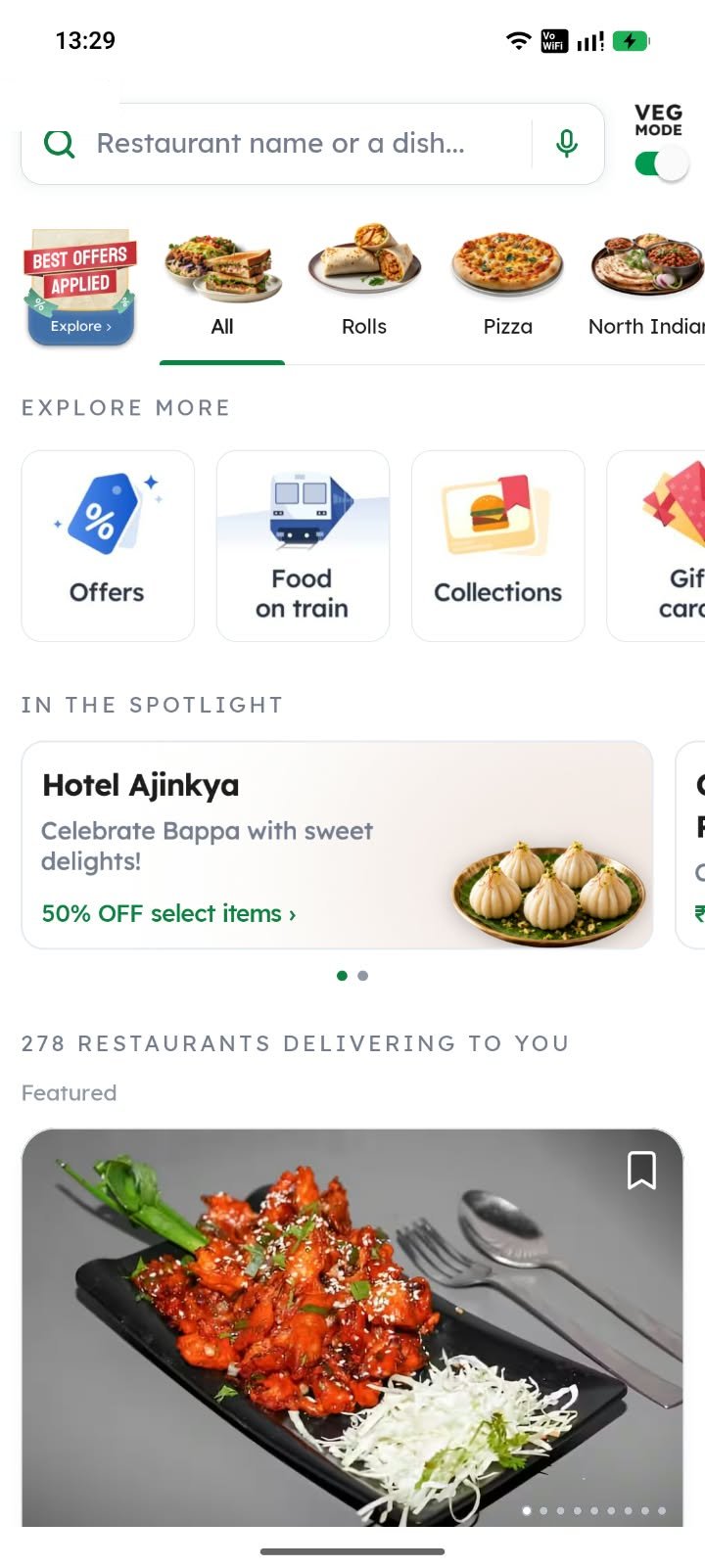
Show it, right on home
A band in Zomato's own style. Each card answers "why should I trust this?"
Before this, I tried four looks for the same card. The one that looked like Zomato's own cards won, and later became the band.
Ticket
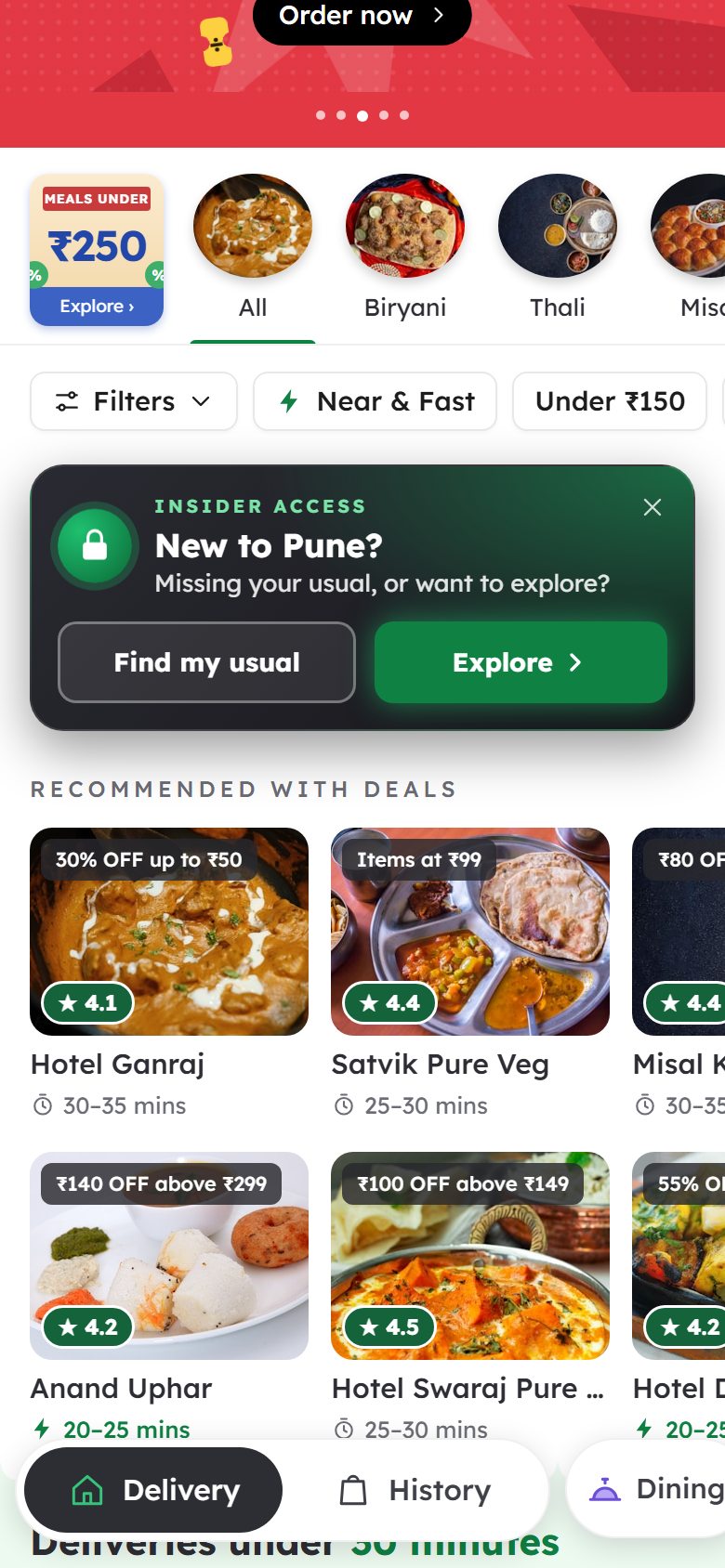
Sealed
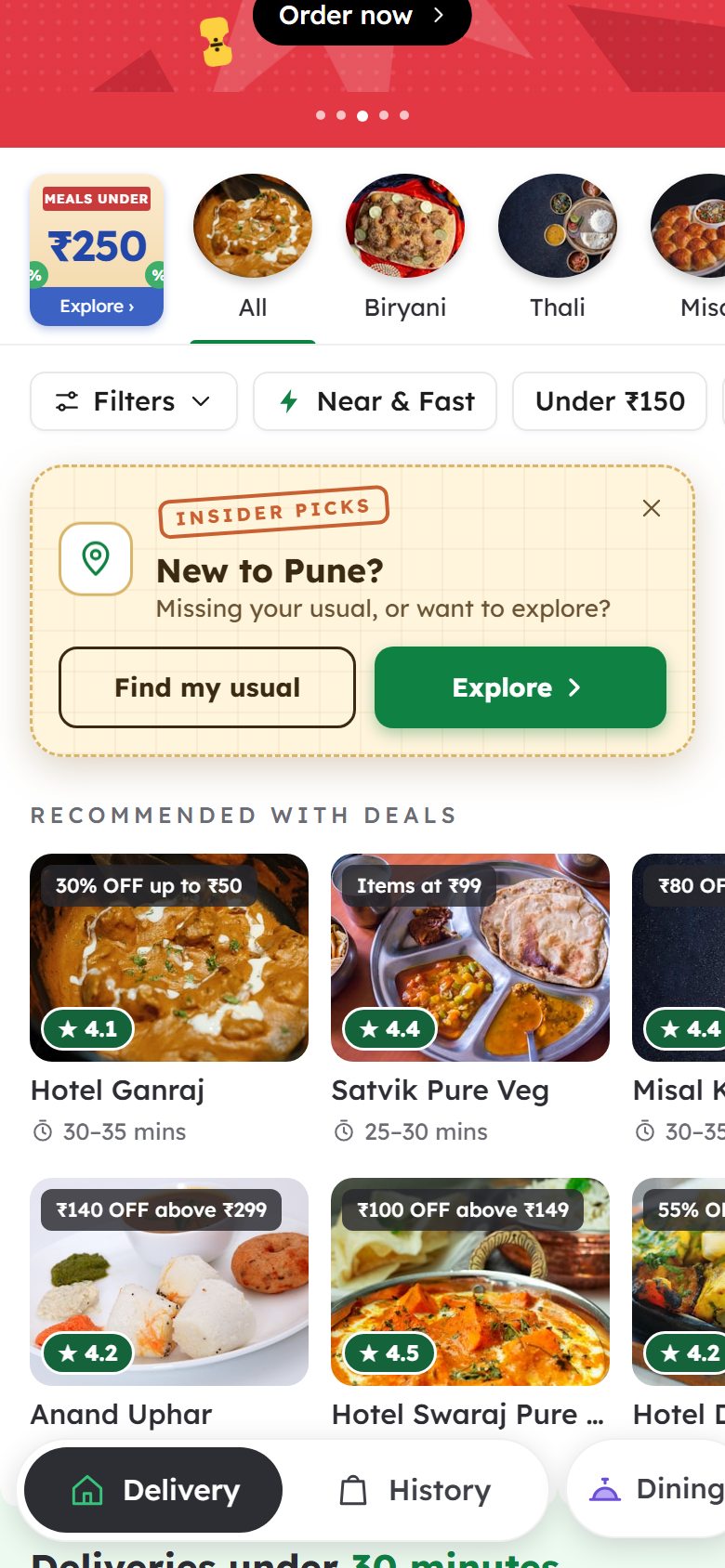
Local's guide
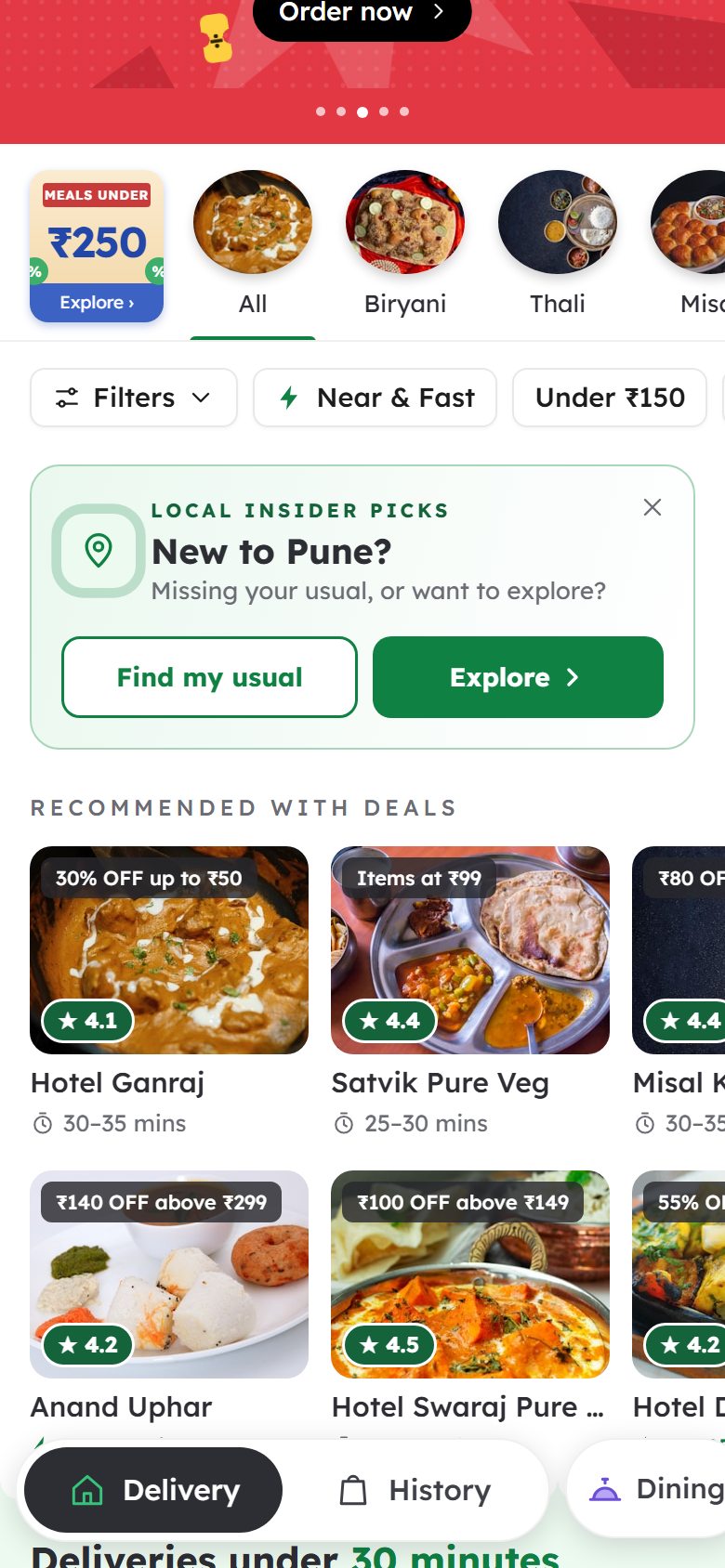
Like Zomato's own
Chose this, over that, because
Chose
Counts of local orders
Over
Star ratings
Because
Interviewees said ratings feel personal. A count shows how many people chose it.
InterviewsChose
A tag only when it is true
Over
The same tags on every card
Because
A tester saw "Most reordered" on every card. If everything is special, nothing is.
Tester 1Chose
Zomato's own rail style
Over
A separate promo card
Because
Zomato already shows friends' orders this way. It should feel native, not like an ad.
Benchmark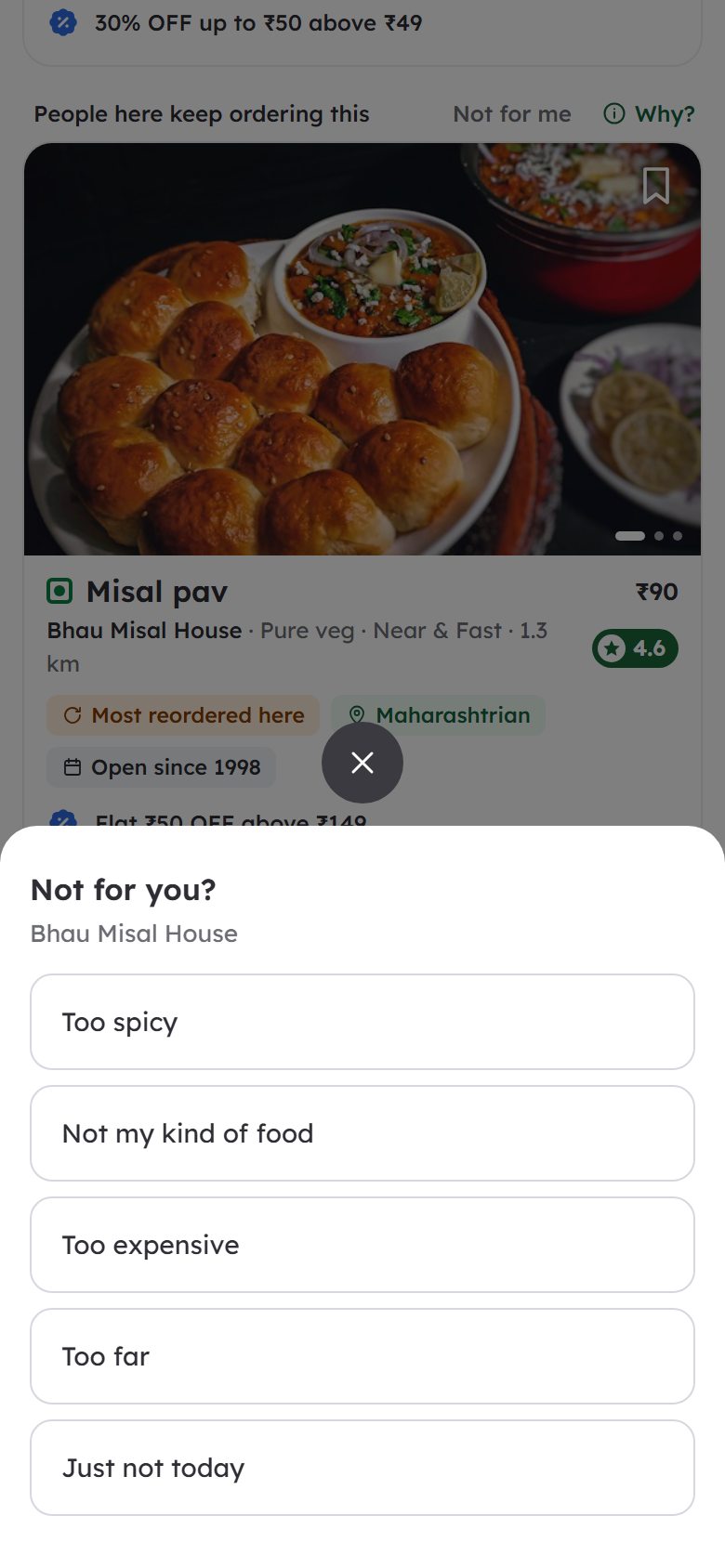
Chose
A way out
Over
A dead end
Because
"What if I don't like these either?" Now there is Not for me, and None of these.
Tester 13 testers pushed back. I changed it.
Shared on WhatsApp. They typed their own area and sent screenshots and voice notes.
"I can't tell Find my usual and Explore apart."
Before
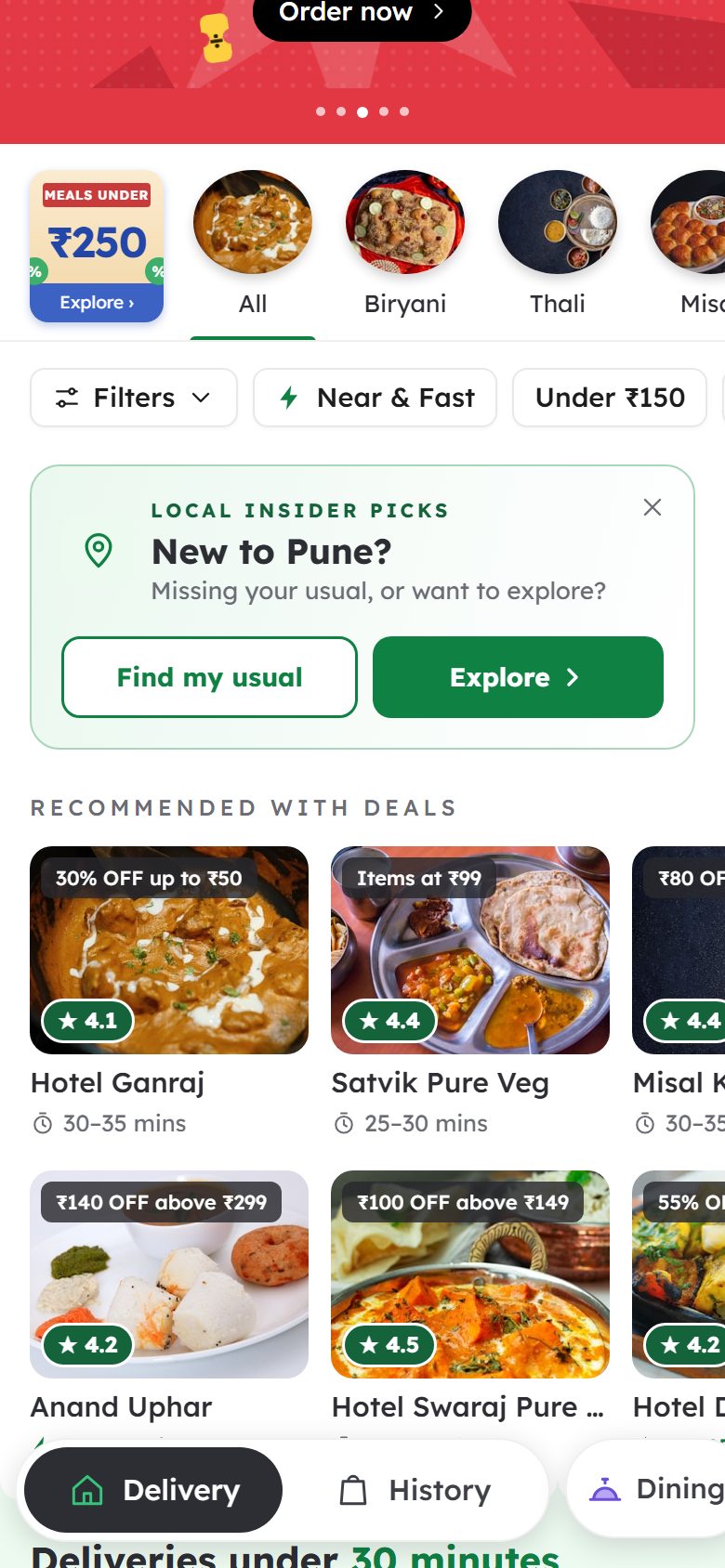
After
"Show me the food, not hotels. Put the proof on the card."
Before
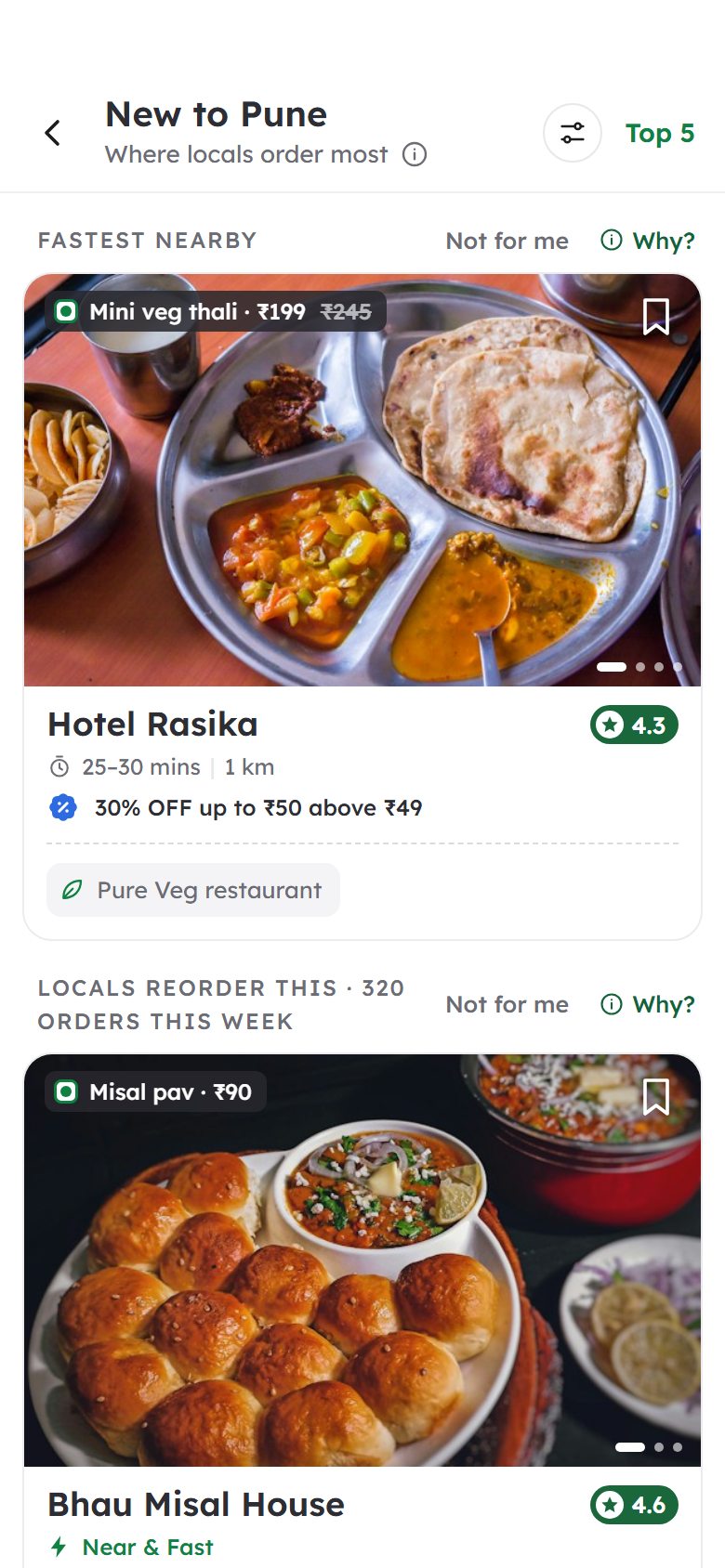
After
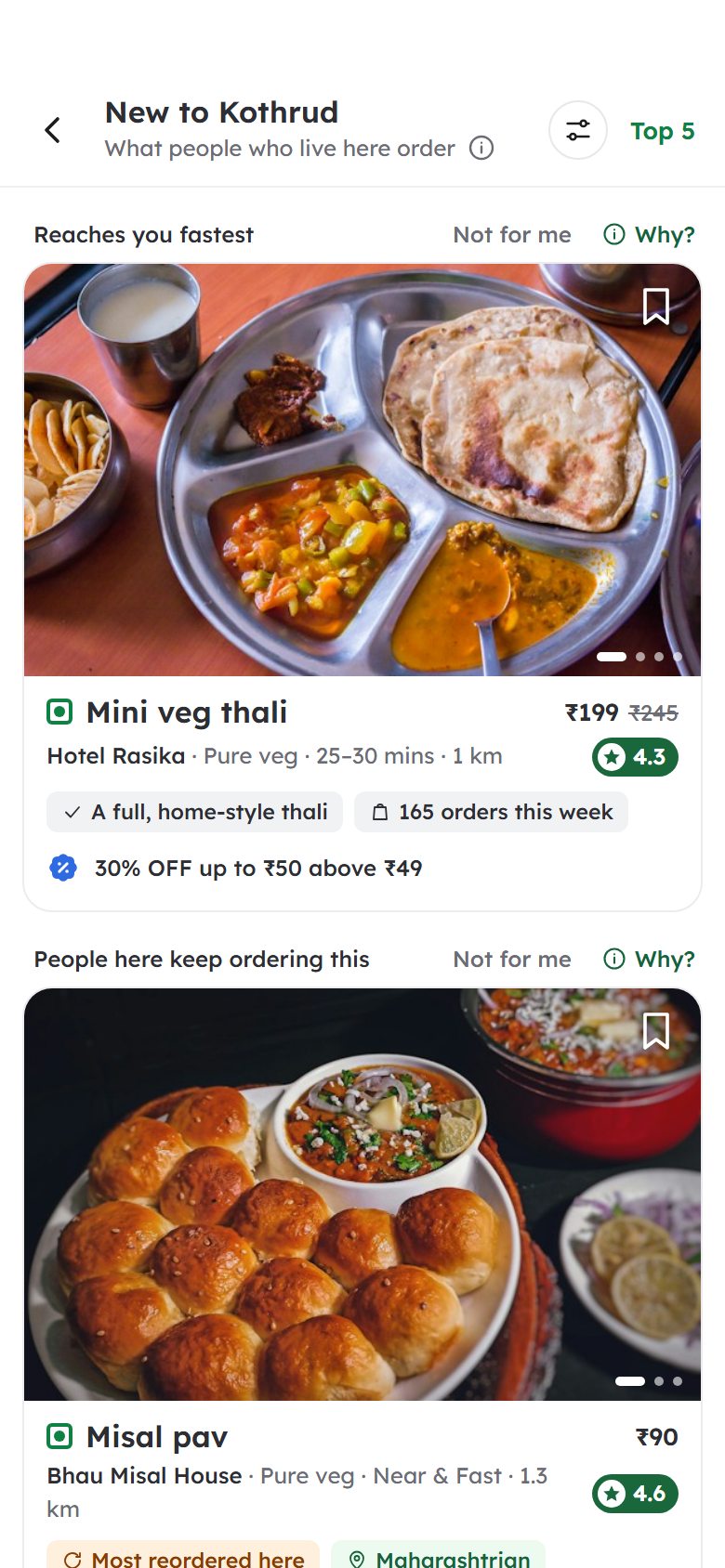
Also fixed: veg mode that didn't filter, text bigger than Zomato's (re-measured), and four smaller bugs.
When it doesn't go to plan
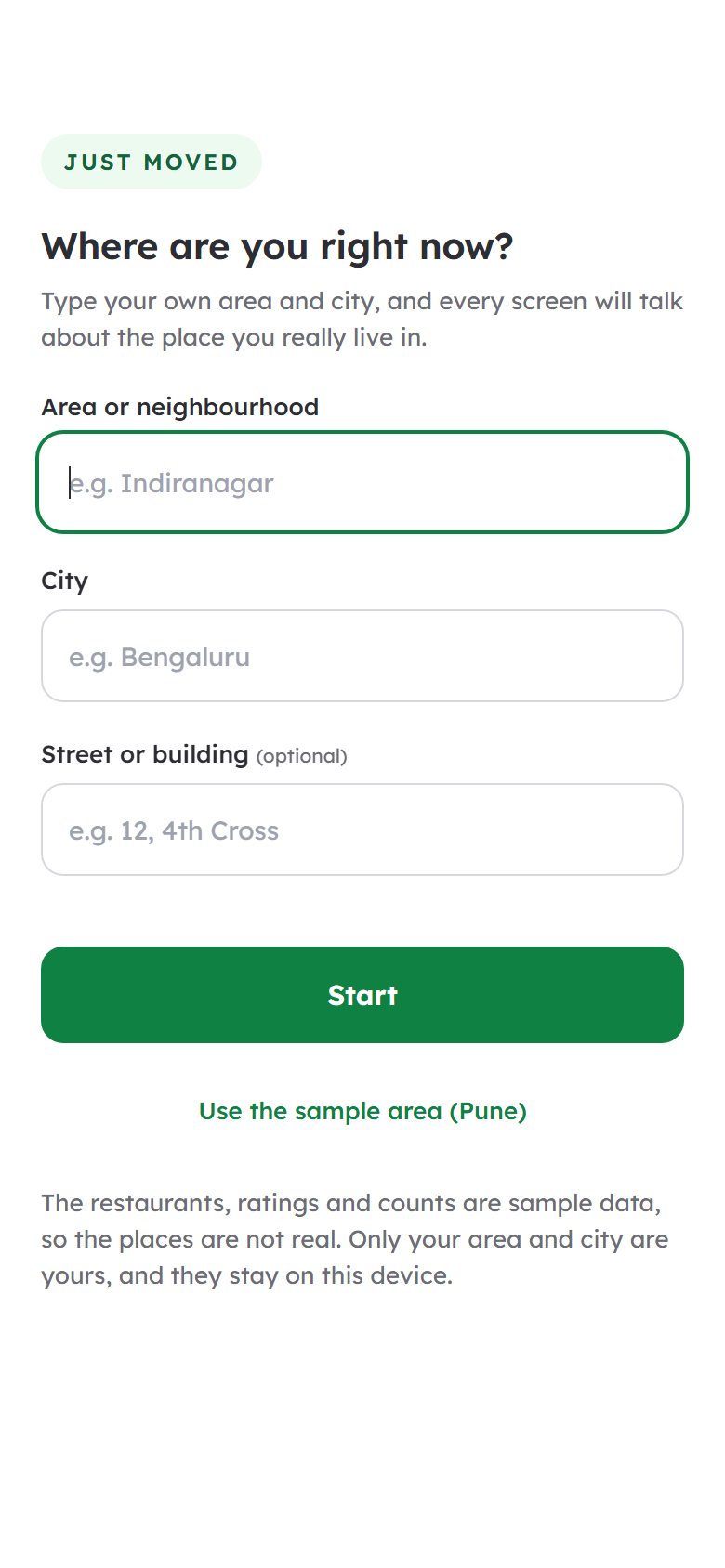
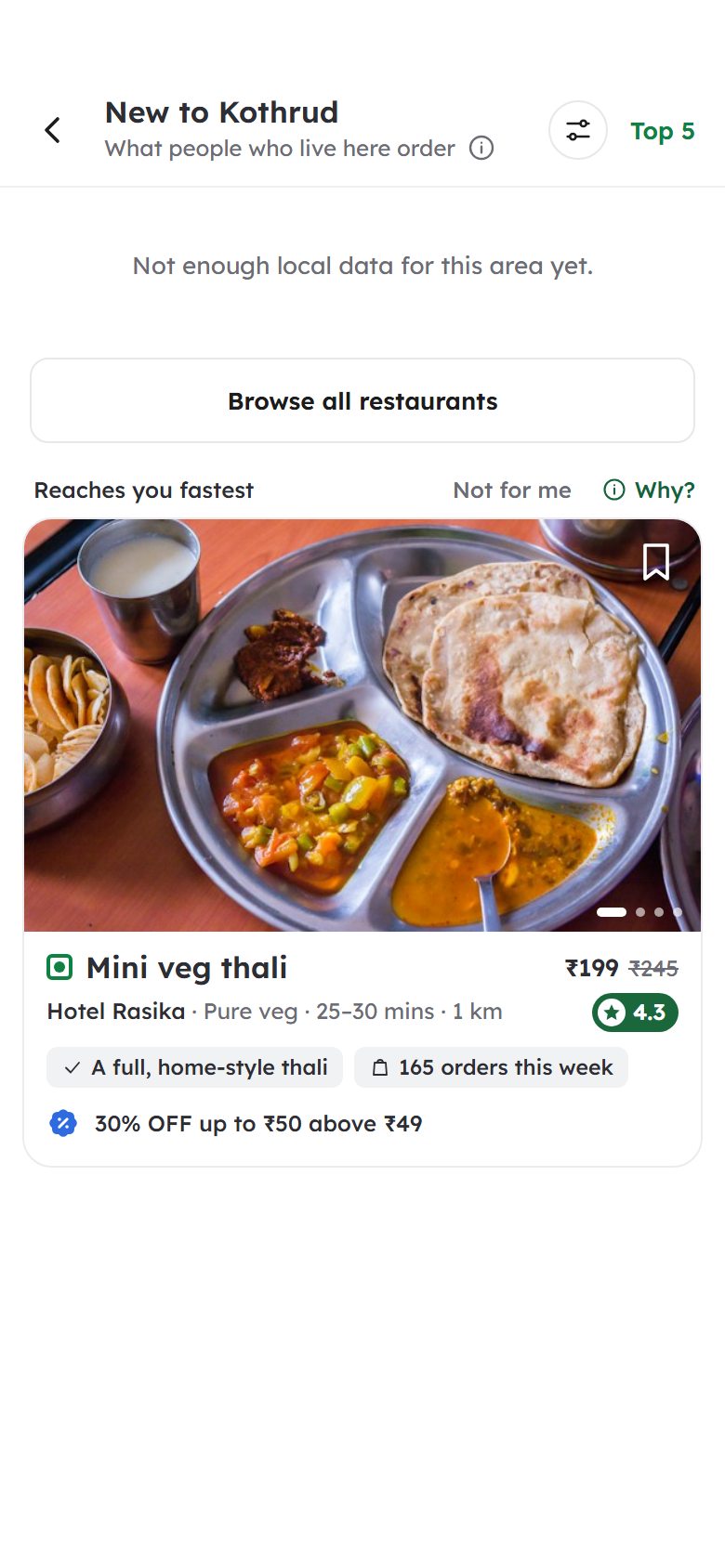
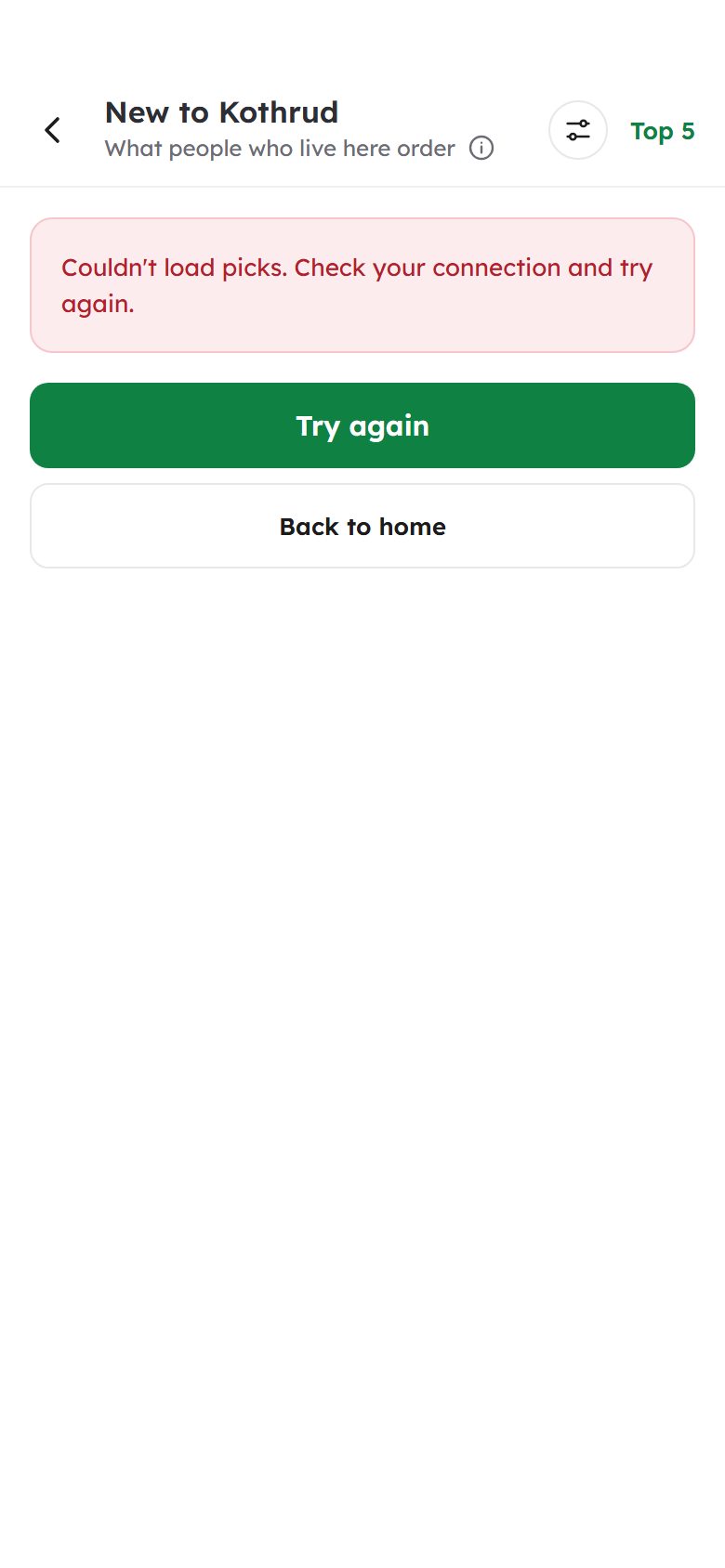
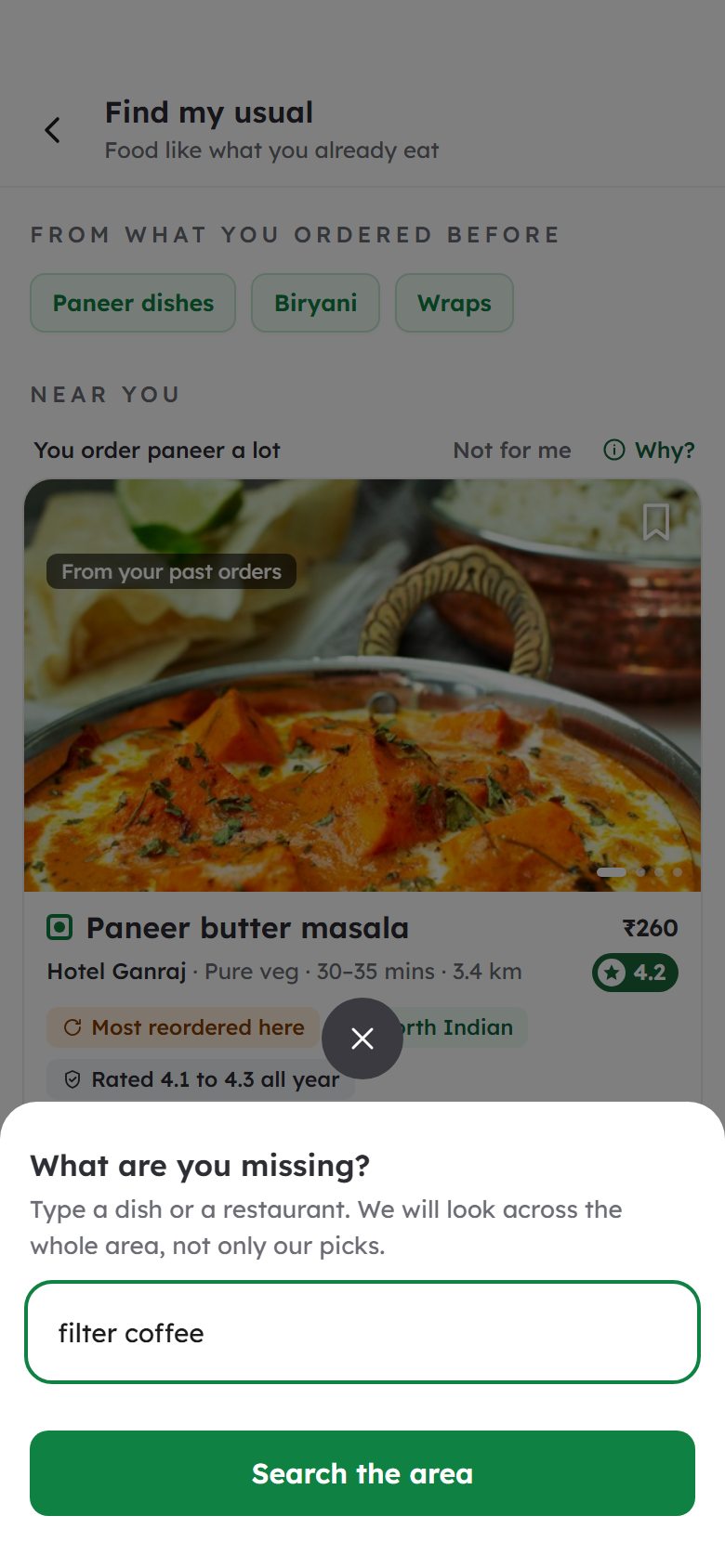
What I'd measure, and what I cut
Measure
Orders within 10 minutes
Newcomers who see the band vs those who don't. Then: do they order again from the same place? Guardrail: cancellations.
UntestedCut
Dining
I built it, then saw Bangalore's Zomato already covers it. 2 of 3 testers found it weaker.
Limits
Sample data, 3 testers
Informal feedback, not a usability test. "Not for me" doesn't learn yet.
The prototype, live
Picture this: you moved to Kothrud last week, it’s 9 pm, and you’re hungry. Open the app and find something to order, the way you would on day one. The flow should guide you on its own.
Want a path to follow? Try these:
- Tap “Use the sample area (Pune)” on the first screen (it only asks on your first visit).
- Scroll to “What locals here order” on home. Swipe the band to the end and tap “See all local favourites”.
- Tap “Why?” on a card to see the facts behind the pick: the dish, the restaurant, and what people like.
- Tap “Not for me” on three cards. It asks what you’re in the mood for. At the bottom, “None of these look right?” lets you say what you miss.
Back on home, “Missing your usual?” → “Find it” shows dishes like the ones you always order. The Demo bar at the bottom shows the empty, loading and error states.